
MENUMENU
  • Home
  • Discover
        • Discover the Blackdown Hills

        • Blackdown Hills National Landscape
        • Landscape
        • Habitats
        • Wildlife
        • Farming
        • Community
        • Art and culture
        • Heritage and history
        • Teachers' resources
  • Visit
        • Visit the Blackdown Hills

        • Places to see
          • Easy to access
          • Viewpoints
          • Heritage
          • Wildlife sites
        • Walks and rides
          • Walking
          • Easy routes
          • Cycling routes
          • Horse riding
        • Visitor advice
          • Transport
          • Maps
          • Children’s activities
          • 30 ways to explore
          • Events
  • About us
        • About Blackdown Hills National Landscape

        • What is a National Landscape?
        • What we do
        • How we are funded
        • Blackdown Hills Partnership
        • Management Group
        • Meet the team
        • Jobs
        • Contact us
  • Our work
        • Our work

        • Planning
        • Annual reviews
        • Document Library
        • Management Plan
        • Our projects
        • Current Projects
          • Connecting the Culm
          • Farming & Woodland Group
          • Landscape Enhancement Initiative
          • Making Rivers Better
          • Nature Recovery Plan
          • Rivers Run Through Us
          • Triple Axe Partnership
        • Completed Projects
          • ELMS Tests and Trials
          • Blackdown Hills Natural Futures
          • Catchment Communities Conference
          • Corry and Coly Natural Flood Management
          • Culm Community Crayfish project
          • Culm Enhancement Project
          • Discovering Dunkeswell Abbey
          • Dunkeswell War Stories
          • Field boundaries & linear landscape features
          • Nature and Wellbeing
          • Metal Makers
          • Somerset Nature Connections
          • Woods for Water
  • Get involved
        • Get involved

        • Volunteering
        • Wildlife sightings
        • Community projects
        • Find funding
          • Access for All
          • Capital Funding
          • Farming in Protected Landscapes
          • Sustainable Development Fund
          • Blackdown Hills Countryside Fund
        • Donate
        • John Greenshields Award
  • News & social

Chapter 2: Special qualities
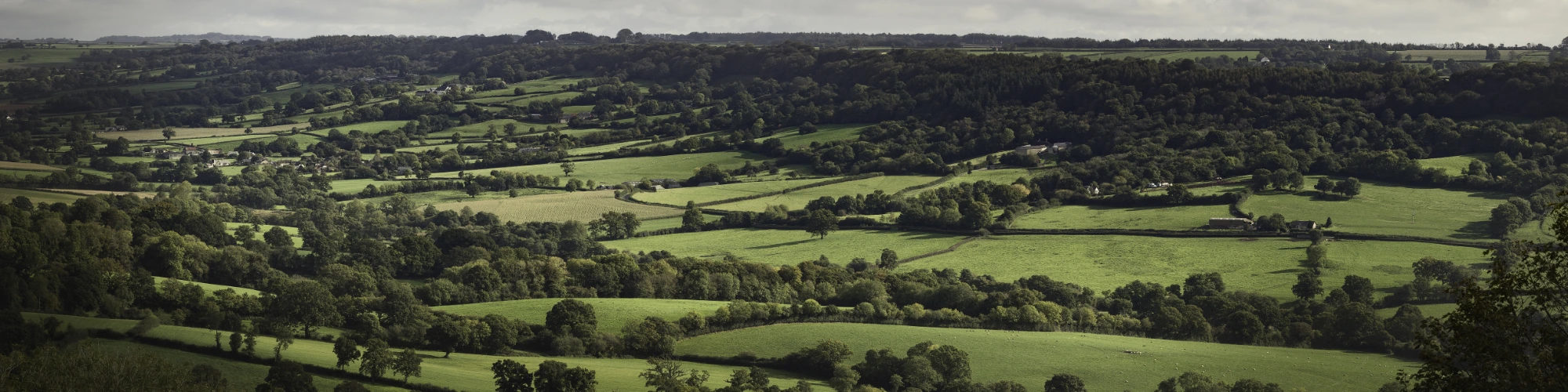
View from Dumpdon Hill

Chapter 2: Special qualities

Published: Oct 2025

Blackdown Hills National Landscape Management Plan 2025-2030

Chapter 2: Special qualities

The Blackdown Hills National Landscape has a suite of special qualities that together make it unique and outstanding, underpinning its designation as a nationally important protected landscape. Special qualities may be considered as specific components of ‘natural beauty’, distilling out the key attributes that combine in particular ways to form the natural beauty of the designated Area of Outstanding Natural Beauty (AONB). These are the special qualities, individually and in combination, that we need to conserve and enhance for the future, and they should be considered in all decisions affecting the National Landscape. 

From the dramatic, steep, wooded north-facing scarp, the area dips gently southwards as a flat-topped plateau deeply dissected by valleys. This is the northern part of the East Devon Plateau – one of the finest, most extensive in Britain. The tops are open and windswept; in the valleys villages and hamlets nestle among ancient patterns of small, enclosed fields and a maze of winding lanes lined with high hedgebanks. The steep valleys support a patchwork of woodland and heath, nationally and regionally important habitats which support a wealth of important, charismatic species and interesting plant communities. 

Key to the Blackdown Hills designation as an AONB is the subtle combination of four outstanding aspects of the landscape, as described in The Blackdown Hills landscape: A landscape assessment. Countryside Commission, 1989 and set out below: 

It is an area notable for its unspoilt rural character, which remains relatively undisturbed by modern development and so ancient landscape features, special habitats, historical and archaeological remains have survived intact. In the winding lanes, the hidden valleys and traditional villages there is a sense of stepping back in time; of the connections between nature and humanity. The countryside remains largely unchanged and there is an identifiable and characteristic vernacular, pastoral landscape. 
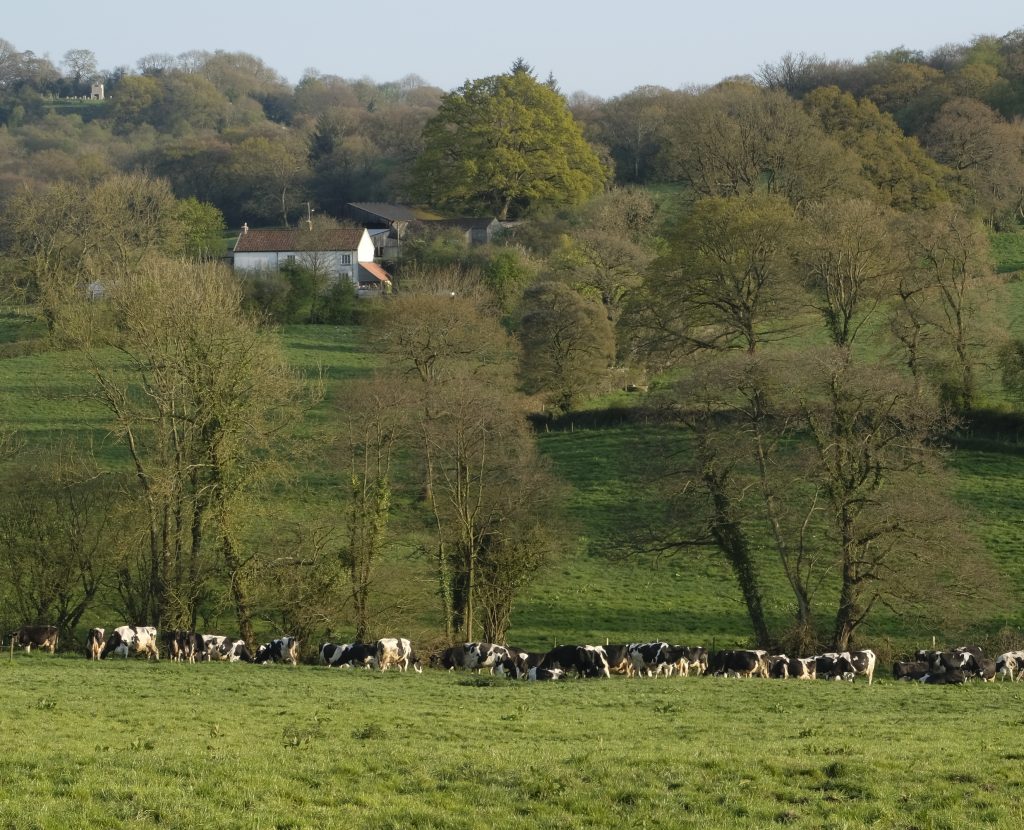
A heard of cows in a field with trees in the background
Photo: Pauline Rook

There is a unique geology. The composition of the underlying Upper Greensand geology of the Blackdown Hills and the adjoining East Devon National Landscape is unique in Britain and is one of the area’s strongest unifying features. It has given rise to the distinct topography of flat-topped plateau, sharp ridges and spring-lined valleys. The springs in turn have created the characteristic pattern of rough grassland, mire and wet woodland vegetation on the valley sides. The nature of the Greensand rock has meant that these plant communities are particularly diverse. Moreover, the geology has provided a local building material, chert, which is uncommon elsewhere. 
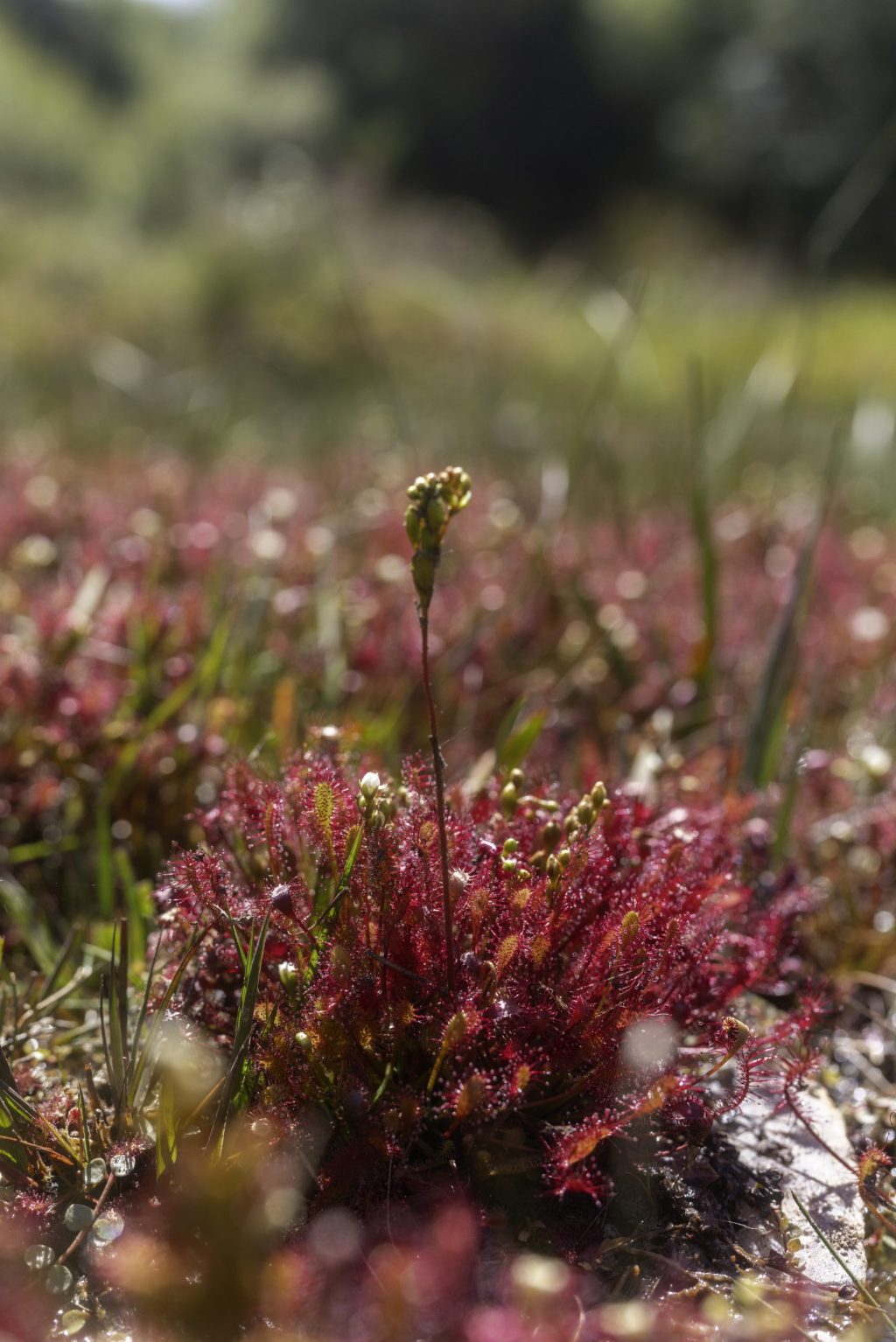
Sundew
Sundew in a springline mire. Photo: Liam Marsh

There is a diversity of landscape patterns and pictures. The visual quality of the landscape is high and is derived from the complex patterns and mosaics of landscapes. Although the scenery is immensely varied, particular features are repeated. There are long views over field-patterned landscapes. Ancient, species-rich hedgerows delineate the fields and define the character of the landscape, enclosing narrow twisting lanes. The open plateau is dissected by steep valleys, the slopes supporting a patchwork of ancient woodland. The history of medieval and parliamentary enclosures has resulted in a contrasting landscape of small fields in the valleys and larger fields with straight hedges on the plateau. There are patches of heath and common, bog and mire and there are fine avenues of beech along the ridge. At a more detailed level there is a variety of visual and ecological interest; heathland birdlife, ground flora of woodland and mire, and colourful wildflowers on hedgebanks. 

It is a landscape with architectural appeal. The landscape pattern is punctuated by a wealth of small villages, hamlets and isolated farmsteads of architectural value and distinctive character. Devon and Somerset are recognised nationally for their fine rural architecture, but the Blackdown Hills contain a special concentration of such buildings and where the vernacular character is particularly well preserved. Predominant materials are chert and cob with thatch, over time often replaced by corrugated iron, or clay-tiled roofs. The appeal lies in the way in which the buildings fit so naturally into their surroundings. 

This summary is supplemented by more detail and further information about the special qualities of the Blackdown Hills National Landscape included in Appendix 1, which should be referred to for a thorough understanding of the distinctive characteristics and valued qualities that make up the Blackdown Hills special sense of place. 
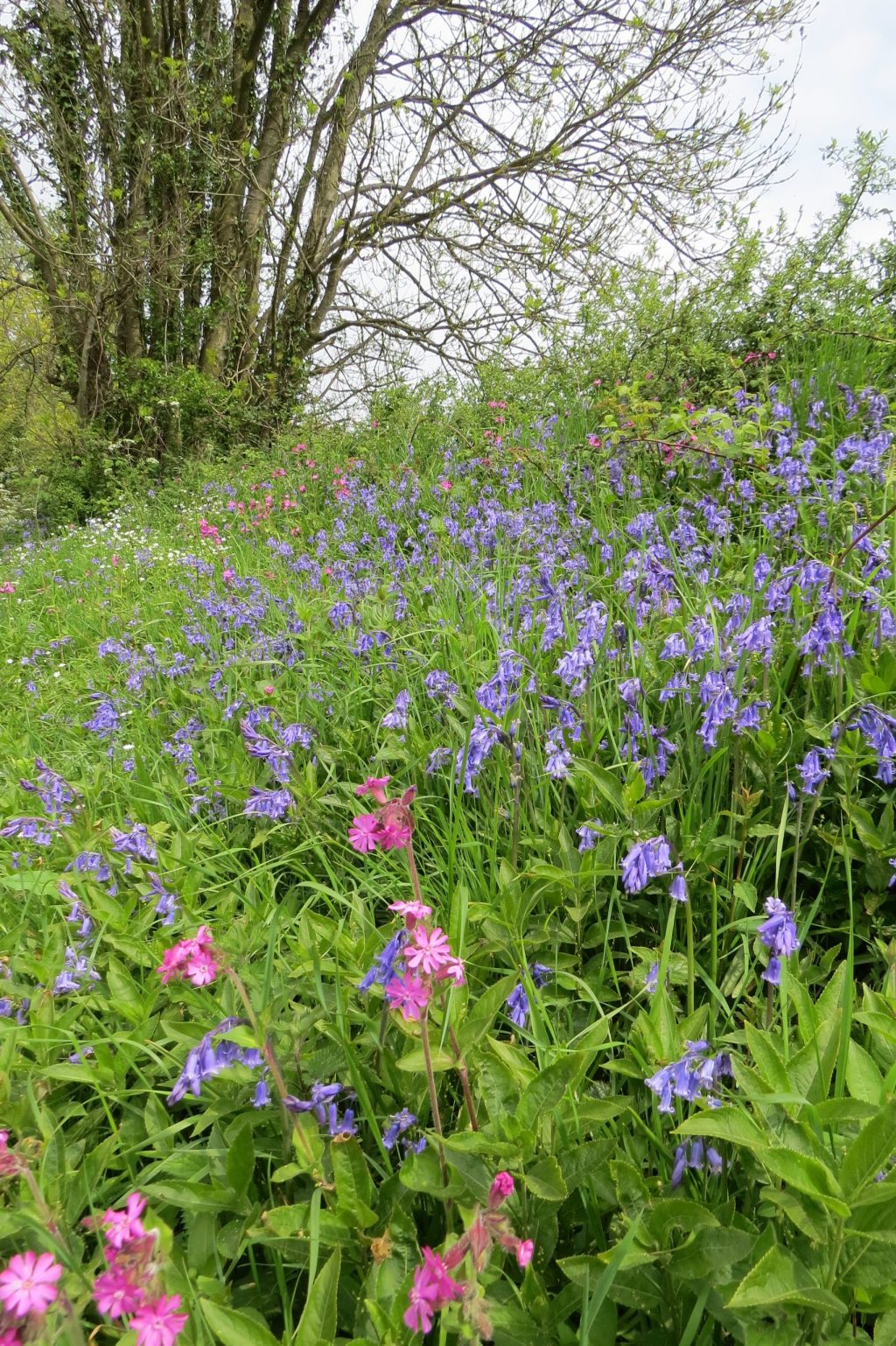
Colourful spring flowers in on a hedge bank
Spring flowers on a hedge bank near Culmstock. Photo: Clare Groom

Management Plan

How to use this Management Plan

Chairman’s foreword

Ministerial letter of support

1. Introduction

2. Special qualities

3. Vision

4. Place

5. People

6. Nature

7. Climate

8. Delivery and Monitoring

Appendix 1

Appendix 2

Appendix 3

Appendix 4

Strategic Delivery Plan

Footer Navigation
Widget
  • Contact us
  • Accessibility
  • Cookie policy
  • Privacy policy
  • Donate
Widget
  • Find us on Facebook
  • Find us on Twitter
  • Find us on Instagram
  • Widget


    Blackdown Hills National Landscape is the new name for Blackdown Hills Area of Outstanding Natural Beauty.

    Widget
    Blackdown Hills National Landscape logo - illustration of fields, a river and Wellington Monument

    © 2025 Blackdown Hills AONB

    Site by Pulse8